
From Manifesto to Collective Praxis: Towards Critical-Feminist and Justice-Centered Epistemic Futures in Science Education
FINAL SUBMISSION DATE MOVED TO
SEPTEMBER 30, 2026!
quotes from the manifesto
“Feminist science education is not a new endeavor but part of a long-standing intergenerational struggle against exclusion, marginalization, and epistemic violence within science and science education institutions and practices.”
“This special theme calls for a radical reimagining of science education through feminist praxis that is intersectional, transdisciplinary, and transnational.”
“We advocate for science education that foregrounds relational ethics, joy, and critical consciousness, and that supports students and educators in becoming agents of collective social transformation.”
“This is a call for the unconventional, the daring, and the transformative, a call for work that refuses to be pigeonholed, a call for work that is brave.”
the call for papers
Feminist science education has long pushed back against the patriarchal, colonial, and neoliberal forces that shape who gets to participate in science and whose knowledge counts. Building on this legacy and our manifesto, this special theme calls for intersectional, transdisciplinary, and transnational feminist praxis rooted in care, joy, critical consciousness, and collective world-building.
Despite decades of work, science education continues to reproduce inequities, silence dissent, and demand assimilation. In this moment of backlash and precarity, feminist refusal and epistemic disobedience are essential. We ask what science education can become when shaped by community, agency, and justice—not compliance.
This theme creates space for bold feminist scholarship that centers care, collectivity, kin-making, everyday “little justices,” creative methods, joy, and transnational solidarity. Together, we aim to reimagine science education toward more just, inclusive, and imaginative futures.

Topics for this call for papers include but are not restricted to:
Research centering care, collectivity, community, relations, and co-construction of knowledge in science education spaces
Pedagogies cultivating joy, critical consciousness, and collective social transformation in science classrooms
Epistemic disobedience and feminist refusal as strategies to disrupt dominant science education norms and practices
Desire-based and non-extractive research approaches that move beyond damage frameworks toward strength, resistance, and hope
Dialogues and practices that elevate “little justices” and ethical encounters in science learning environments
Feminist, queer, Indigenous, and decolonial interventions that reimagine what counts as science and who counts as a knower
Creative, speculative, and unconventional methodologies that expand forms of feminist science education scholarship
…and more topics that push, trouble, or expand what feminist science education can do and become.

join the special theme
collective writing sessions
We host collective writing sessions for those who want to think, write, and create in community. Come as you are whether you’re drafting, reflecting, or just beginning.
Wednesdays, 16:00–18:00
(CEST – Central European Summer Time)
(15:00–17:00 UK, 10:00–12:00 Eastern Time (US), 07:00–09:00 Pacific Time (US), 19:30–21:30 New Delhi (IST), 00:00–02:00 Melbourne (AEST, next day))
FAQs
-
Absolutely! Please join our writing sessions (information above) to talk to the co-guest-editors or send an email to the whole group (feministmanifestoscienceed@gmail.com) or the corresponding author Katerina (katerina.gunter@umu.se) to set up a meeting with us.
-
We begin accepting manuscripts for this special theme within the Critical Perspectives in Science Education Section of Science Education on November 1, 2025 and continue to accept manuscripts into the theme until September 1, 2026.
Please note: Beyond that we will continue the conversation as part of the on-going work of the section Critical Perspectives in Science Education in the journal Science Education.
-
We welcome theoretical, empirical, and creative submissions that push boundaries in science education research and practice. Alongside traditional articles, we encourage collaborative and experimental formats such as autoethnography, speculative or poetic inquiry, and art-based scholarship that challenge conventional methodologies and representations of science. We are also working within the constraints of publishing with Wiley which include restrictions on possible article formats, limited possibilities of multimedia contributions and e.g. art-based work and creative methodologies. We therefore encourage the community to embed their work in the format that is possible for Wiley to publish.
One example of what is possible is this piece by Mindy J. Chappell and Maria Varelas here.
Submissions outside of the research article form can be submittes ad comment. Comments will, however, be carefullly reviewed by the guest editorial team and the editors in chief
Please note that when submitting your piece on the Wiley platform, do not select “issue” but connect the piece to the issue when asked later in the process if it is part of a special issue.
-
We do not require abstracts but can support you in the process of developing your ideas and gauging if this special theme could be a good fit for your work. Reach out to the guest editorial team and/or join our writing and conversation sessions.
Please find Science Education’s author guidelines here.
-
You find the call for contributions and a link to the submission page here:
Science Education Call for Papers From Manifesto to Collective Praxis: Towards Critical-Feminist and Justice-Centered Epistemic Futures in Science Education. -
We aim for a timeline from submission to publication of four months.
-
All submissions undergo a double-blind peer review and each manuscript is reviewed by two to three independent reviewers, one of whom is a member of the Guest Editorial Team with expertise in the theme area. The review process follows the same rigorous standards as regular submissions, with final decisions made in consultation with the lead guest editor and the journal’s editorial leadership.
-
This special theme will include work that speaks to and moves beyond the themes proposed in the manifesto, engaging feminist scholarship and praxis in genuine, grounded and non-tokenizing ways. We’re looking for pieces that are in true dialogue with feminist thought and work that doesn’t just reference feminism but lives it through its questions, methods, and collaborations. This might mean community-based or creative approaches, collective writing, or interventions that blur boundaries between research, activism, and art. Not everything needs to be a traditional journal article; what matters most is that the work contributes meaningfully to critical-feminist conversations, pushing ideas and practices forward with care, rigor, and imagination.
-
The special issue will not automatically be published open access. It follows the standard Wiley publishing model for Science Education, which means authors can choose to publish their articles open access by paying the applicable Article Processing Charge (APC). It's worth checking whether your institution has a Wiley open access agreement, as many universities and research organizations cover APCs for their affiliated authors. If so, you may be able to publish open access without incurring the full cost yourself. For more information about APCs, institutional agreements, and open access options, see: https://onlinelibrary.wiley.com/page/journal/1098237x/homepage/fundedaccess.html Additional note: Wiley's APC waiver and discount programs appear to apply primarily to fully open access journals and may not be available for hybrid journals such as Science Education. More details are available here: https://authors.wiley.com/author-resources/Journal-Authors/open-access/article-publication-charges/index.html
an invitation to be epistemically disobedient
Epistemic disobedience means daring to de-link from the dominant politics of knowledge, asking who produces knowledge, why, when and where, and instead imagining science and education rooted in justice, multiplicity and freedom.
Mignolo, 2009
Elena Vasiliou reflecting on epistemic disobedience at ESERA 2025
amazing | inspiring | badass initiatives
-
![]()
Biotales
“Biotales is an innovative outreach project involving early career biology researchers where they co-create outreach material on their personal research journeys.”
-
![]()
BLAZE
“We seek to light a fire that will spread across movements, institutions, and geographies, forging new pathways for abolition, sovereignty, and solidarity.”
-
![]()
Feminist Killjoy
“My name is Sara Ahmed, and this is my research blog. I am a feminist killjoy. It is what I do. It is how I think. It is my philosophy and my politics.”
-
![]()
Black Feminist Collective
“Black Feminist Collective is an intergenerational group of Black feminists and womanists who stand for Black liberation in its entirety.”
-
![]()
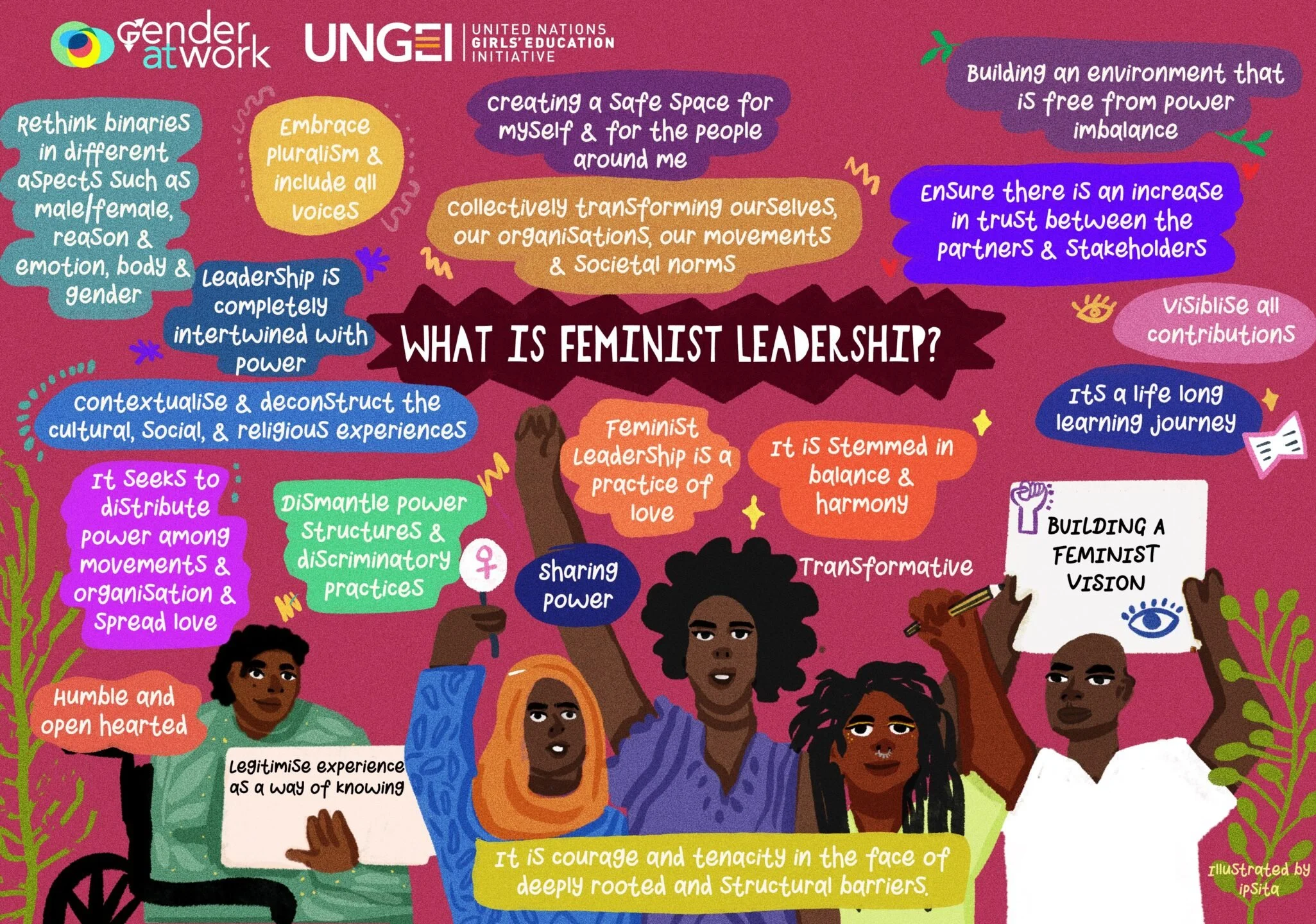
Gender At Work
“An international feminist knowledge and action network that works at a global level to end gender-based discrimination and build cultures of equity and inclusion.”
-
![]()
Elena's website
“Being an educator in the Central Prison of Cyprus for five years impacted and changed my ontological and epistemological perspectives.”
-
![]()
Equity Unbound
An emergent, collaborative curriculum to create equity-focused, open, connected, intercultural learning experiences across classes, countries and contexts.
-
![]()
MYFest2026
A global open education festival is hosted virtually throughout June, July & August 2026.
-
![]()
Something to add?
Do you want to share a website with the community?
Drop us a quick message through the link provided below.



follow us on social media



Remembering an amazing colleague
Dr. Maria Wallace
Maria will be remembered as a feminist scholar of education who insisted that teaching, research, and community life be more just, more relational, and more livable. Her work challenged narrow, technocratic, and hierarchical understandings of science education, and instead made space for embodiment, vulnerability, emergence, and difference. She wrote against the idea that people must fit inherited norms in order to belong, and for the possibility that education might help us become otherwise. That commitment was not only intellectual; those who remembered her publicly described her as deeply kind, fearless, and committed to a more inclusive world. Maria, you are so, so, so missed.
Read Marias’s Obituary here and hear her voice as it has travelled thorugh her works.
Wallace, M., & Higgins, M. (2024). Conclusion: Amplifying science education research with(in) a minor key. In S. Tolbert, M. F. G. Wallace, M. Higgins, & J. Bazzul (Eds.), Reimagining science education in the Anthropocene, Volume 2 (pp. 409–416). Palgrave Macmillan. https://doi.org/10.1007/978-3-031-35430-4_22
Tolbert, S., Wallace, M. F. G., Higgins, M., & Bazzul, J. (Eds.). (2024). Reimagining science education in the Anthropocene, Volume 2. Palgrave Macmillan. https://doi.org/10.1007/978-3-031-35430-4
Stengers, I., Higgins, M., & Wallace, M. (2024). In conversation with Isabelle Stengers: Ontological politics in catastrophic times. In S. Tolbert, M. F. G. Wallace, M. Higgins, & J. Bazzul (Eds.), Reimagining science education in the Anthropocene, Volume 2 (pp. 363–387). Palgrave Macmillan. https://doi.org/10.1007/978-3-031-35430-4_20
Byers, C. C., & Wallace, M. F. G. (2021). A story of bodying in science education. Cultural Studies of Science Education, 16(2), 387–401. https://doi.org/10.1007/s11422-021-10054-8
Higgins, M., Wallace, M. F. G., & Bazzul, J. (2018). Disrupting and displacing methodologies in STEM education: From engineering to tinkering with theory for eco-social justice. Canadian Journal of Science, Mathematics and Technology Education, 18(3), 187–192. https://doi.org/10.1007/s42330-018-0020-5